

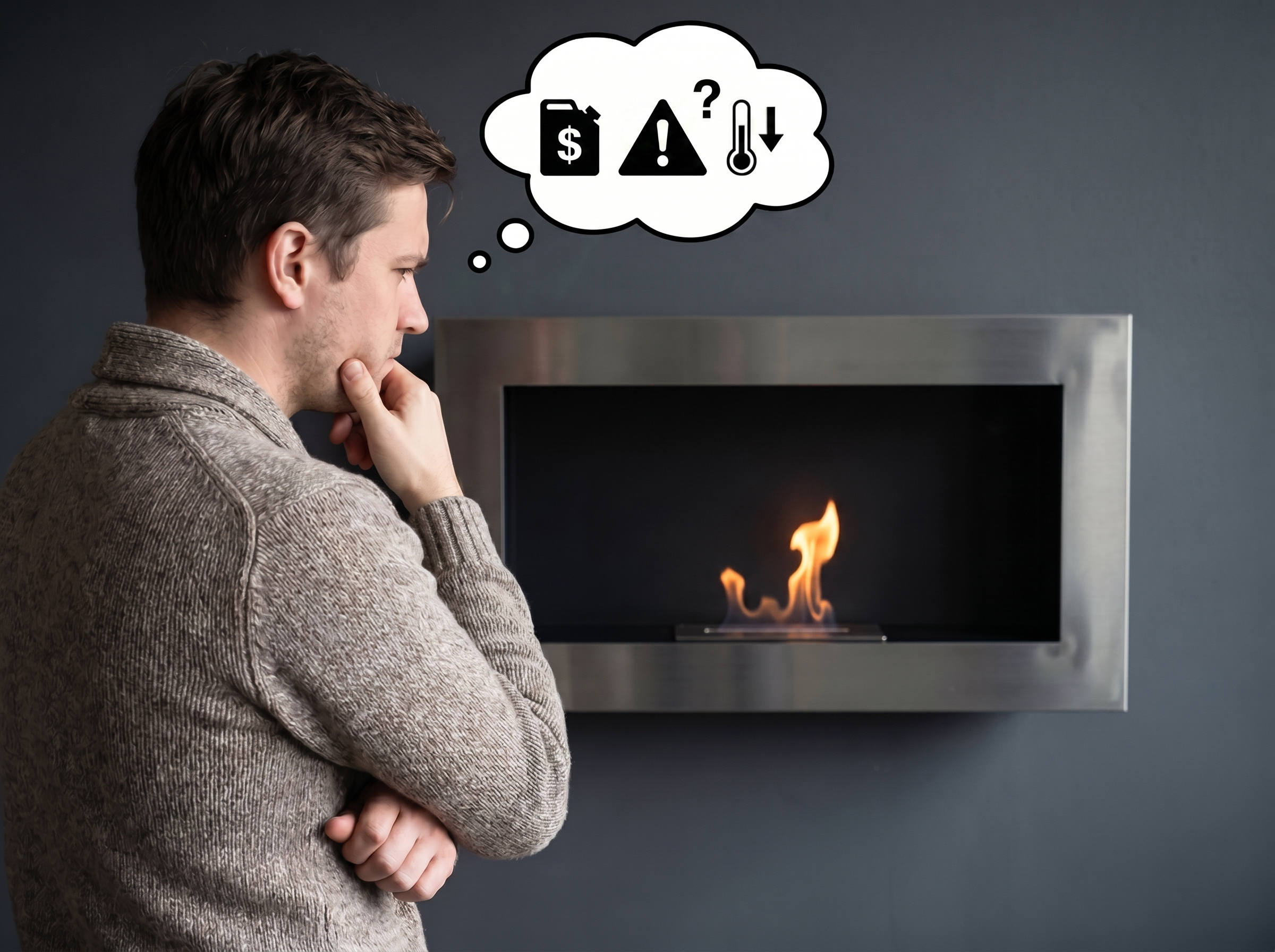
Bioethanol fireplaces have gained popularity as a modern and eco-friendly alternative to traditional wood-burning fireplaces. Their sleek designs and clean-burning nature make them an attractive choice for homeowners looking to add warmth and ambiance to their living spaces. Unlike wood-burning fireplaces, they do not produce smoke, soot, or ash, making them a low-maintenance heating solution that integrates seamlessly into contemporary homes. The ease of installation and flexibility in placement have also contributed to their growing appeal, as they do not require a chimney or venting system.
However, despite their many advantages, there are some considerations worth understanding before making a purchase. Factors such as fuel costs, heat output, and safety precautions all play a role in determining whether a bioethanol fireplace is the right choice for your home. In this guide, we explore the key disadvantages of bioethanol fireplaces in detail, whilst also providing practical solutions to help mitigate these challenges.

Heat Output
Does a Bioethanol Fireplace Generate Heat?
One of the main disadvantages of bioethanol fireplaces is their relatively low heat output compared to traditional fireplaces or gas heaters. Most models produce between 1.5 and 4 kW of heat, which is sufficient for supplementary heating but not for heating an entire home. During colder months, users may need to rely on additional heating sources to maintain a comfortable temperature. The heat generated also tends to be localised, making bioethanol fireplaces ideal for creating a cosy atmosphere in smaller rooms rather than distributing heat evenly throughout a house.
Combining a Bioethanol Fireplace with Other Heating Solutions
Choosing a high-output model or placing the fireplace near seating areas can help maximise the warmth it provides. Models with adjustable flame settings allow for greater control over heat output. For a well-balanced indoor climate, combining a bioethanol fireplace with other heating solutions — such as underfloor heating or wall-mounted radiators — works particularly well. Bioethanol fireplaces are best suited for well-insulated rooms or as a stylish secondary heat source.
Fuel Costs
Is it Expensive to Buy Bioethanol Fuel?
Bioethanol fuel is more expensive than natural gas or electricity when used as a primary heating source. The average consumption rate is around 0.33 to 0.75 litres per hour, depending on the model and flame size. Over time, fuel costs can add up, making it a less economical option for continuous heating. This makes bioethanol fireplaces best suited for occasional use rather than daily operation. Additionally, because bioethanol fuel is often sold in smaller containers, the cost per litre can be significantly higher compared to bulk fuel sources like natural gas or heating oil.
Managing Fuel Costs
Using your bioethanol fireplace for ambiance rather than primary heating is the most effective way to keep costs manageable. Buying fuel in bulk from reputable suppliers can reduce the cost per litre considerably. Choosing a model with an adjustable burner also allows you to control fuel consumption and extend burn times. Using the fireplace selectively — for example, during evenings or special occasions — means you can enjoy its benefits without significantly increasing your heating costs.

Frequent Refuelling
Do I Need to Refill it with Bioethanol Often?
Unlike gas or electric fireplaces, bioethanol fires require manual refuelling. Depending on the burner size, a full tank typically lasts 3 to 6 hours, meaning users need to refill regularly during extended use. Refuelling should only ever be done when the fireplace is completely cool, as adding fuel to a hot burner poses a fire hazard.
Easy and Quick Filling with Minimal Maintenance
The refuelling process is straightforward. Many models feature easy-access burners, and using a spill-proof funnel makes refuelling quick and mess-free. Since bioethanol fires produce no ash or soot, they require very little maintenance overall. Keeping a supply of bioethanol fuel stored safely means you are always ready to go. As long as you follow the standard safety instructions included with your fireplace, refuelling is simple and risk-free.
Open Flames
Is it Dangerous Having Open Flames?
As with any open flame, bioethanol fireplaces require sensible precautions. Some models have open flames that could be hazardous if left unattended, and children and pets should always be kept at a safe distance. Since bioethanol is a flammable liquid, it must also be stored and handled carefully to avoid spills near ignition sources.
Open Flames Are Safe When You Take Precautions
Many modern bioethanol fireplaces come with safety glass panels and straightforward extinguishing systems, significantly reducing the risk of accidents. Following the manufacturer's guidelines, keeping flammable objects away from the fireplace, and placing it in a secure location all contribute to safe operation. A bioethanol fireplace is easy to use safely — simply follow the precautions provided and treat it with the same common sense you would apply to any other open flame.

Traditional Fireplace Experience
Does it Look and Feel Like a Real Fireplace?
Some users prefer the classic experience of a wood-burning fireplace, including the crackling sounds and the aroma of burning wood. Bioethanol fires burn cleanly, meaning they do not produce these sensory elements. For those who associate a fireplace with the comforting ambiance of a wood fire, this could feel like a drawback.
A Modern Fireplace Without the Smoke and Soot
Whilst bioethanol fires lack the sound and smell of wood, they offer a smokeless, soot-free real flame that is much easier to maintain. For those who love the traditional fireplace aesthetic, adding decorative elements such as artificial logs, stones, or glow flame fibres can enhance the look and make it feel more like a wood-burning fireplace. Their clean-burning nature also makes them ideal for apartments and modern homes where smoke regulations prevent the use of traditional fireplaces.
Should You Choose a Bioethanol Fireplace?
Bioethanol fireplaces are not without their limitations, but for most homeowners they represent an elegant, low-maintenance, and eco-friendly way to enjoy a real flame. By understanding the drawbacks and choosing the right model for your space, you can enjoy all the benefits whilst minimising the downsides. When used correctly and with the right precautions, a bioethanol fireplace is as safe and convenient as any other household appliance — and considerably more stylish than most.


